Loop
Redesigning product discovery and PDP conversion for a baby gear rental platform
LOOP is a baby gear rental platform that helps families access high-quality products without the cost, clutter, or waste of ownership.
As Lead Product Designer, I redesigned key parts of the customer journey across homepage discovery, navigation, catalog browsing, and product detail pages. The work focused on helping new customers find the right products faster and feel more confident adding them to cart.
Results
+27% product views from homepage to PDP
+13% PDP-to-cart micro-step conversion


PROJECT SNAPSHOT
Role
Lead Product Designer
Scope
Product strategy, UX audit, information architecture, navigation redesign, PDP optimization, responsive UI, brand refresh support
Primary focus
Improving product findability and PDP-to-cart conversion for new customers
Partners
Product, Engineering, Merchandising, and leadership
Platforms
Responsive web: desktop, tablet, and mobile
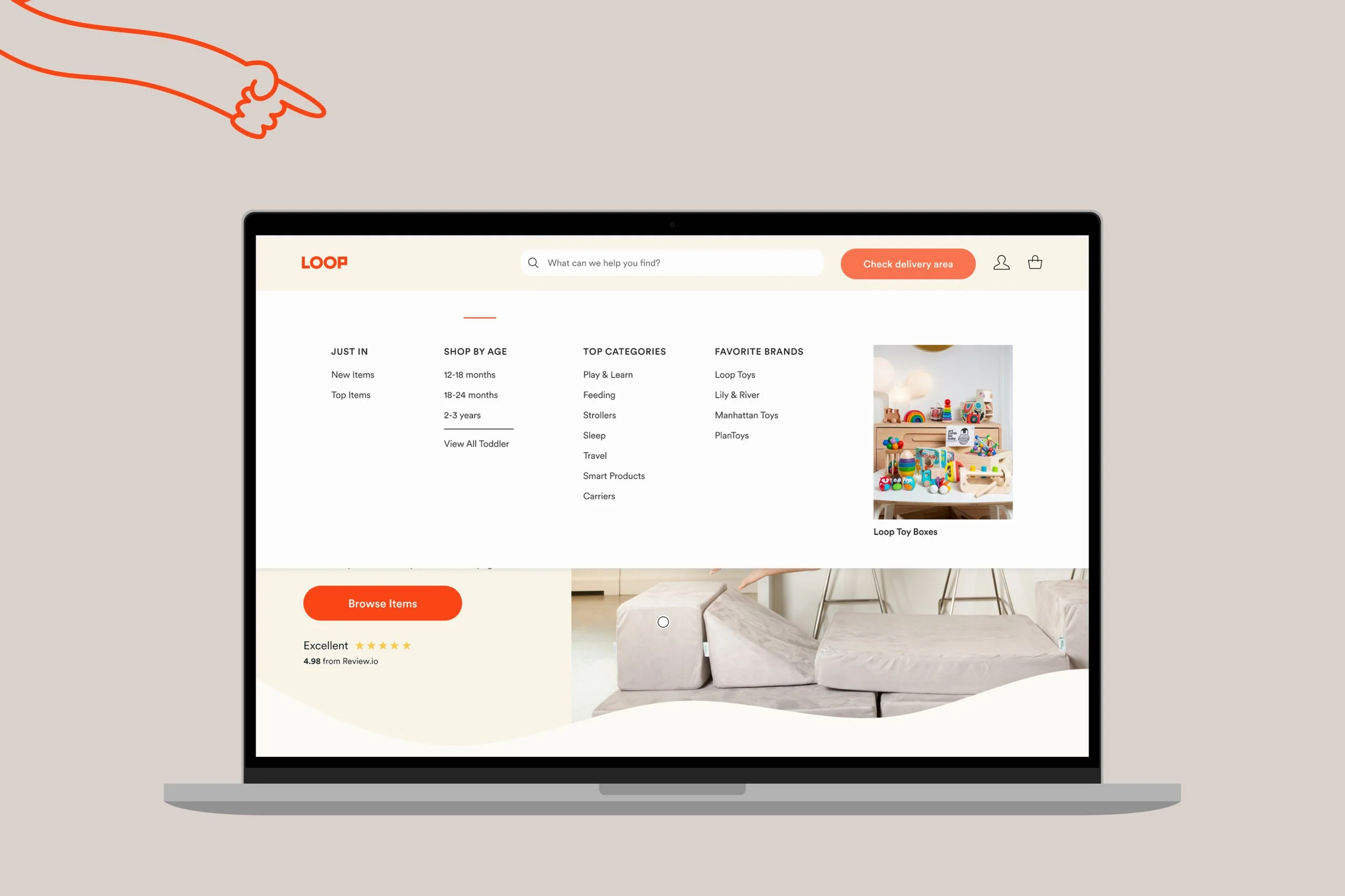
Re-designed desktop navigation that supports multiple discovery paths
BUSINESS GOAL
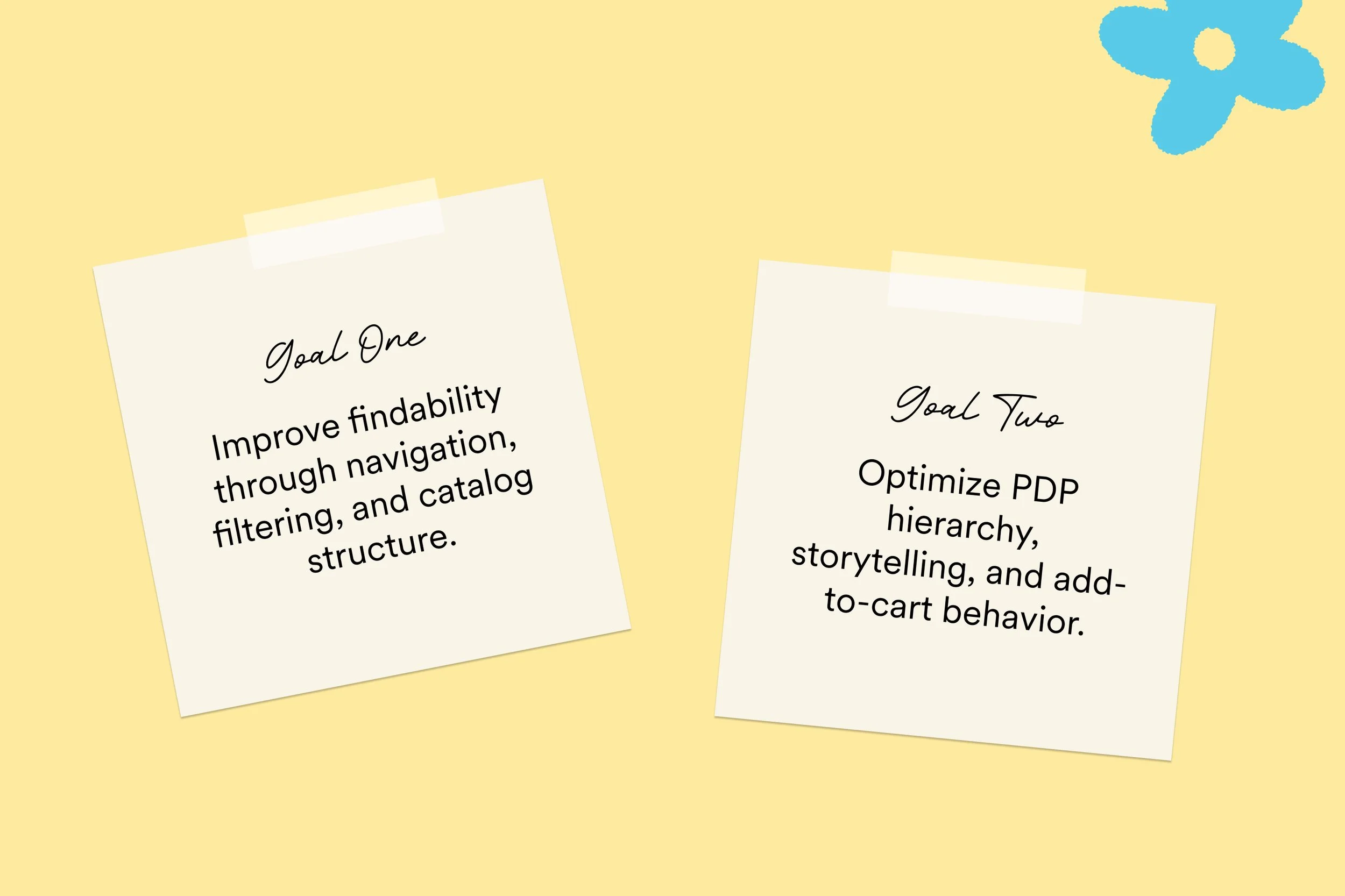
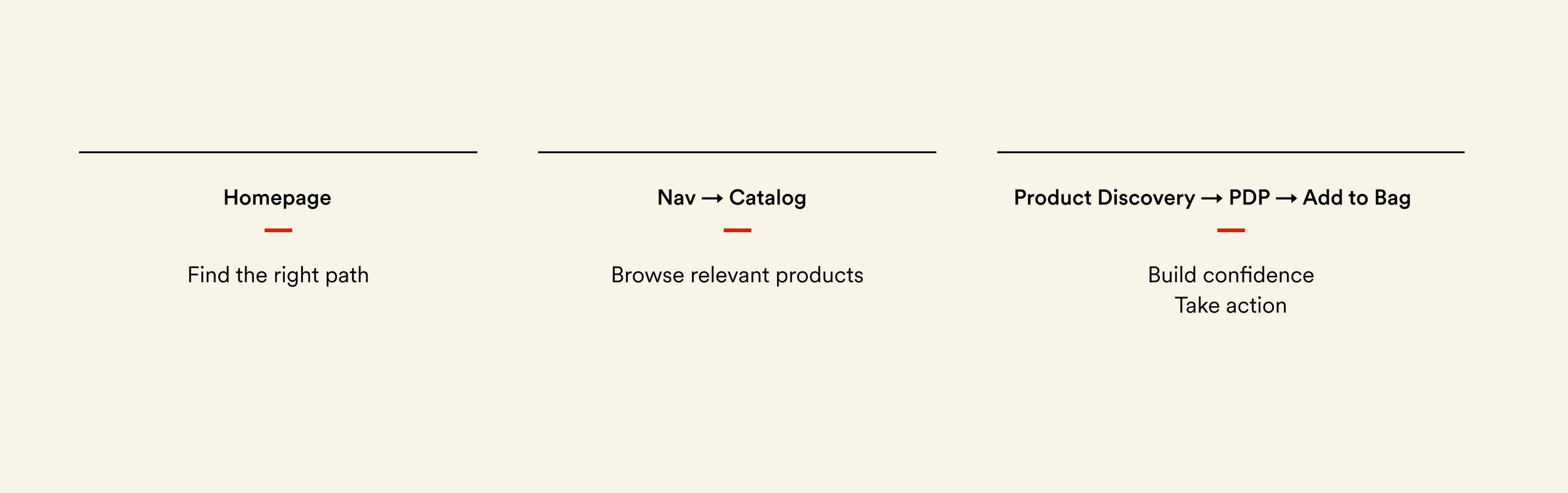
LOOP’s growth goals centered on two moments in the new-customer journey: helping families find relevant products, and helping them feel confident enough to add those products to cart.
The redesign focused on two core opportunities:
Improve product discovery
Make it easier for customers to browse LOOP’s assortment through clearer navigation, filtering, category structure, and guided entry points.
Increase PDP-to-cart conversion
Redesign high-traffic product pages so customers could quickly understand the product, evaluate rental value, and take action with less friction.
WHAT WE LEARNED
Research and behavioral data pointed to a consistent theme: customers understood Loop’s rental model, but needed more clarity and confidence at key decision points. They wanted easier ways to browse the assortment, more reassurance around safety and item condition, clearer delivery and membership expectations, and stronger support on the PDP before adding to cart.
Existing Navigation Designs - Limited discovery paths
Discovery needed more paths in
Customers browsed by age, category, need, and recommendation — not one linear catalog structure.
The PDP needed to build confidence earlier
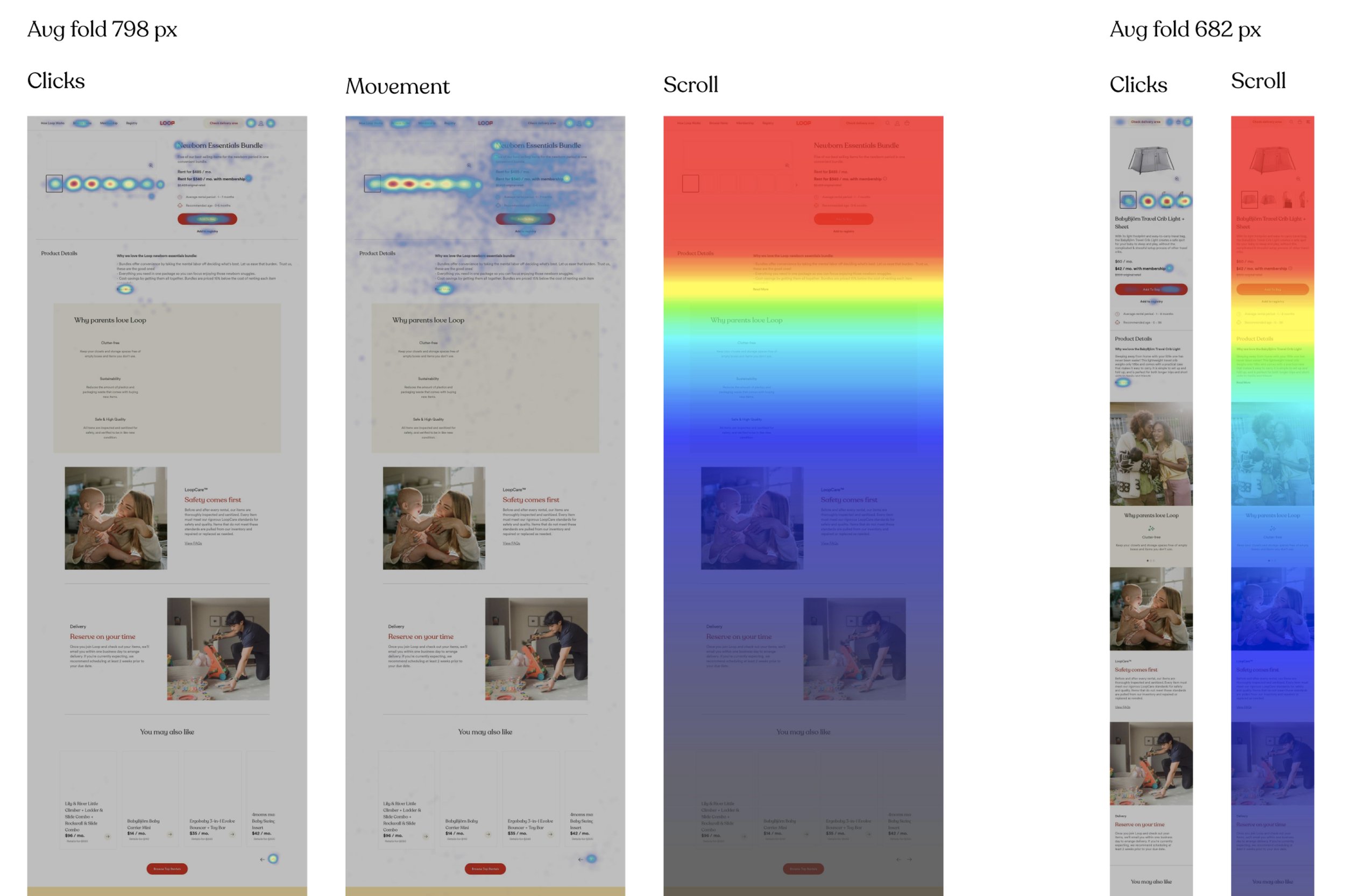
Heatmaps showed attention concentrated near the top while important support content appeared lower.
Existing PDP Designs - Long PDP scroll
USER TESTING FINDINGS
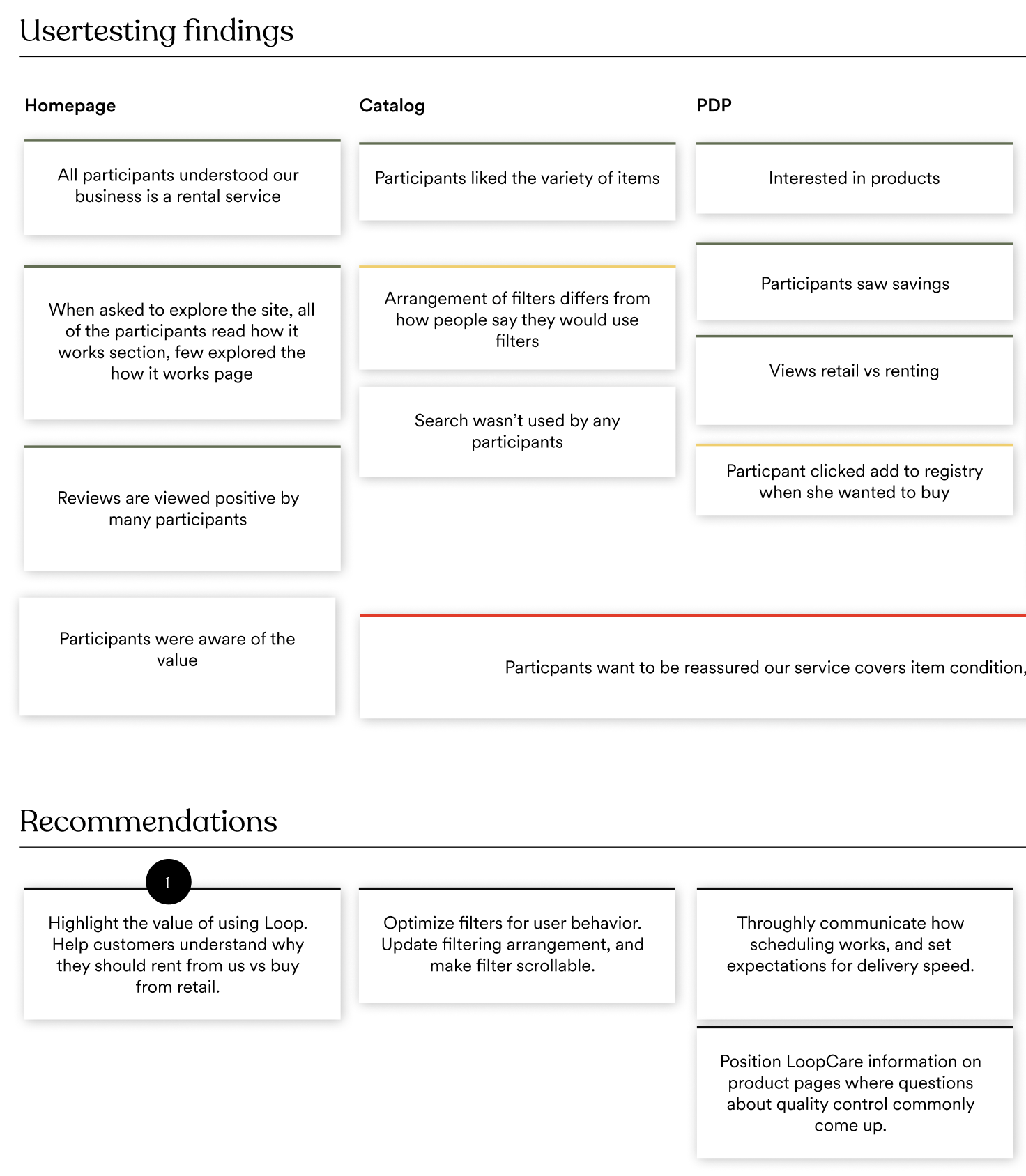
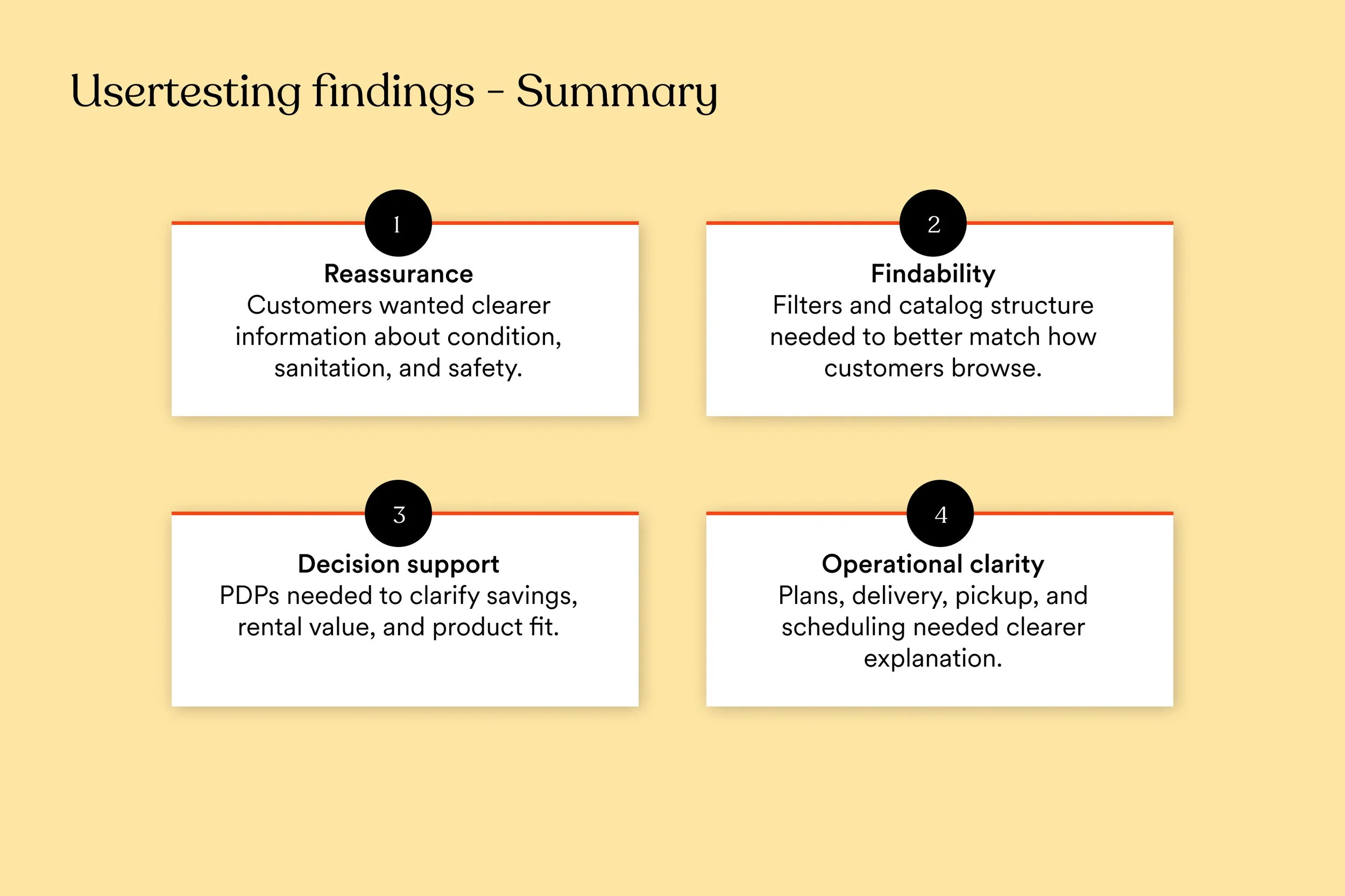
Before redesigning the experience, I reviewed user testing findings across the homepage, catalog, PDP, plans, and cart. The research showed that customers understood LOOP’s rental model at a high level, but still needed more reassurance and clarity at key decision points.
A few themes shaped the redesign:
Customers understood the concept, but needed reassurance.
Participants recognized LOOP as a rental service and saw the value, but wanted more confidence around item condition, sanitation, safety, and quality control.
Discovery needed to better match shopping behavior.
Participants liked the variety of products, but the catalog filters did not always match how they expected to browse.
The PDP needed to do more decision-support work.
Participants were interested in products and noticed savings, but there was confusion around retail vs. renting, registry actions, and what was included.
Membership and delivery expectations needed to be clearer.
Participants wanted to understand how scheduling, delivery, pickup, and plan limits worked before committing.
AUDIT & RESEARCH
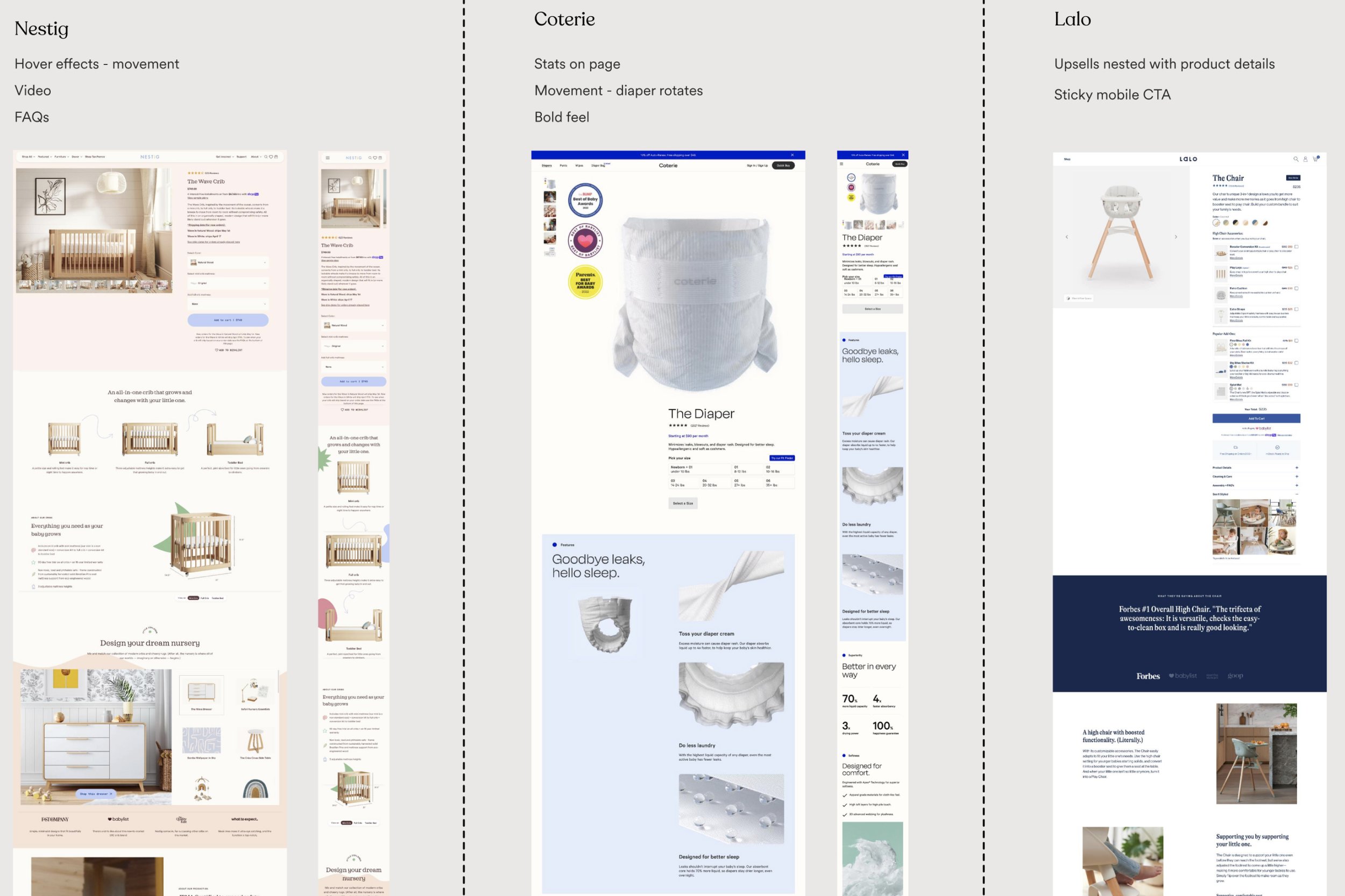
I started by auditing LOOP’s existing navigation and PDP experience across desktop, tablet, and mobile. I also reviewed adjacent commerce brands to understand how larger product assortments were structured across mega menus, mobile drawers, category pages, and promotional entry points.
For the PDP, I reviewed click, movement, and scroll data to understand where customers were engaging and where attention dropped off.
A few patterns stood out:
Customers needed more ways into the catalog
The existing navigation did not fully support browsing by age, category, need, or recommendation.
The PDP had too much distance between intent and support
Customers engaged most heavily near the top of the page, while supporting content appeared further down.
Mobile needed a more focused decision path
On smaller screens, long pages and hidden decision-support content created more friction.
Competitive navigation patterns
PDP click/tap and scroll behavior
STRATEGY
The audit led to a simple design strategy: create clearer paths into the catalog, then make the product page work harder once customers arrived.
I focused the redesign around three principles:
Support multiple shopping mindsets
Parents needed to browse by age, product category, developmental need, recommendation, or brand.
Move decision-support content closer to intent
Important product details, rental context, and trust-building content needed to appear earlier in the decision journey.
Design for responsive conversion
The experience needed to stay clear across desktop and mobile, where long menus and long PDPs could quickly become overwhelming.
NAVIGATION REDESIGN
Taxonomy
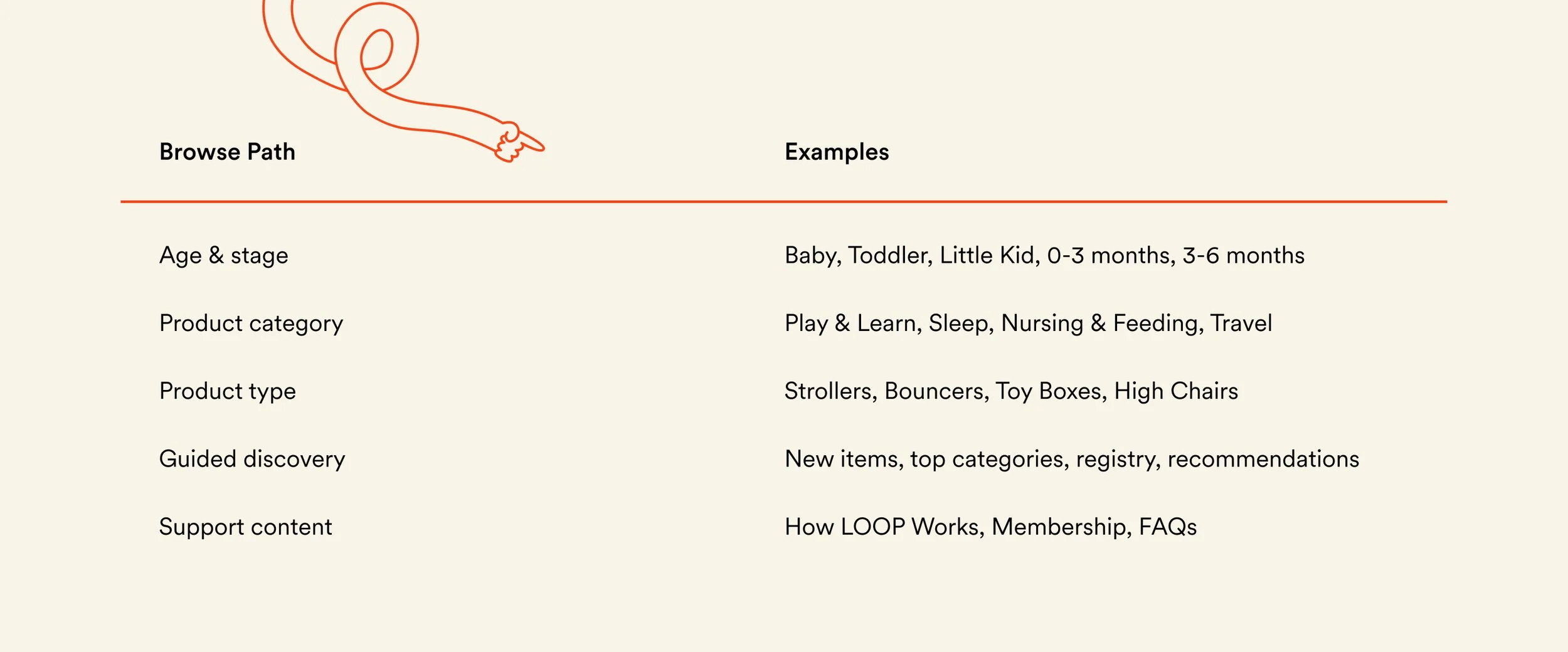
To improve product findability, I first reorganized LOOP’s assortment into a clearer taxonomy. The goal was to reflect how parents naturally shop rather than forcing every customer through a single product-category model.
The new structure supported browsing by age, category, product need, guided recommendations, and supporting content.
DESKTOP NAVIGATION
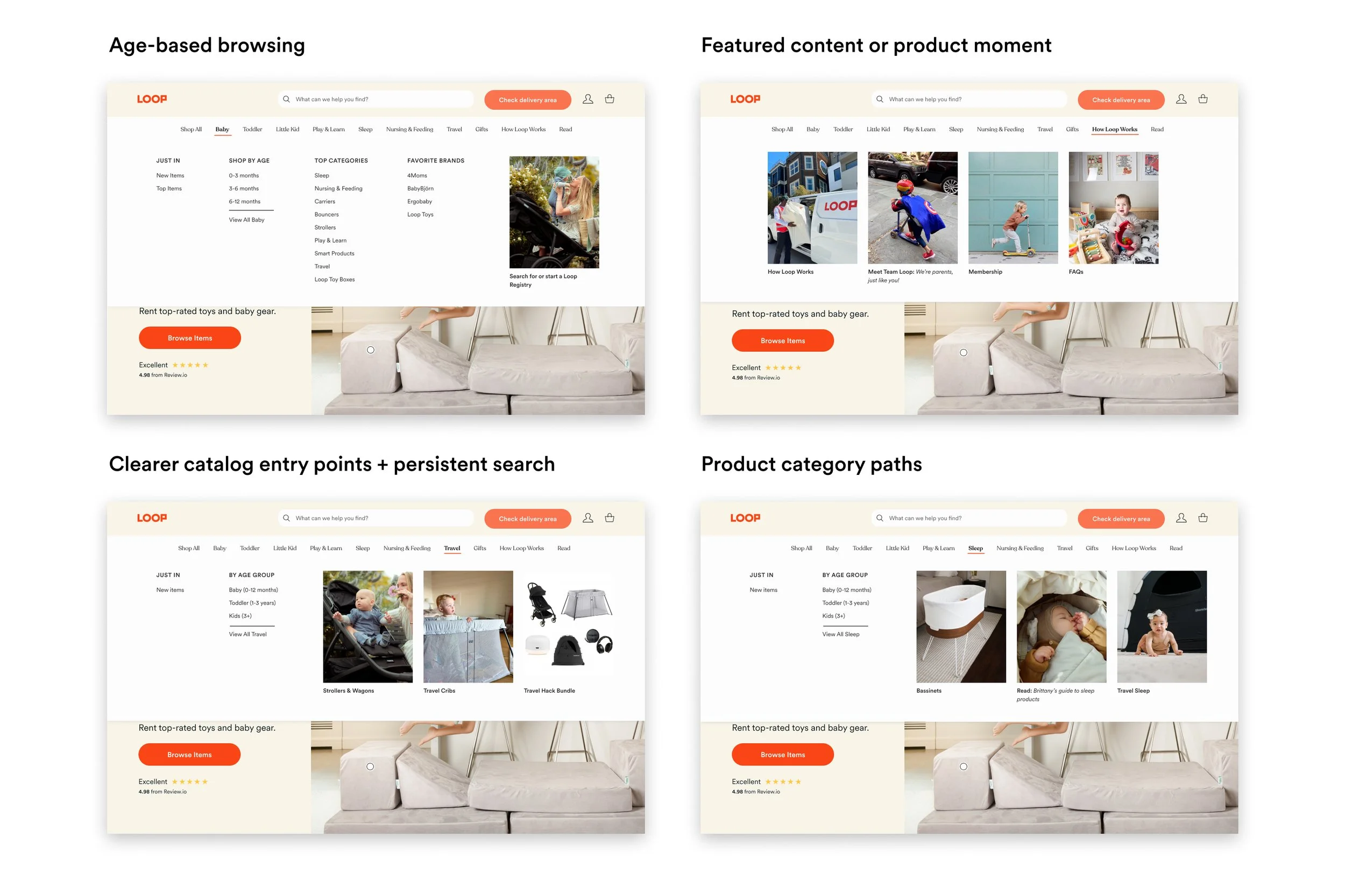
On desktop, I translated the new taxonomy into a mega menu structure that gave customers faster access to high-priority product groups while leaving room for merchandising and editorial moments.
The redesigned navigation created clearer paths for customers who knew what they wanted, while also supporting customers who needed guidance on where to start.